Health and Safety Policy for Removals From Uk
 This Health and Safety Policy sets out the principles and practical measures applied to removals from UK operations. It explains how organisations providing UK removals and moving services must manage risks, protect employees, contractors and customers, and maintain a safe working environment during any relocation activity. The policy is designed to be proportionate and practical, focusing on prevention, training and safe systems of work without over-relying on jurisdictional detail. It applies to domestic and commercial removal services operating across regions.
The purpose of this policy is to ensure that all removal services in the UK operate with consistent safety standards. Responsibilities are identified at each level: senior management provides leadership and resources; supervisors and team leaders ensure compliance on operations; individual staff and contractors follow safe working practices. The document highlights the importance of systematic risk assessment, safe manual handling, use of appropriate personal protective equipment, and safe driving for vehicles used in house removals UK and other relocation tasks.
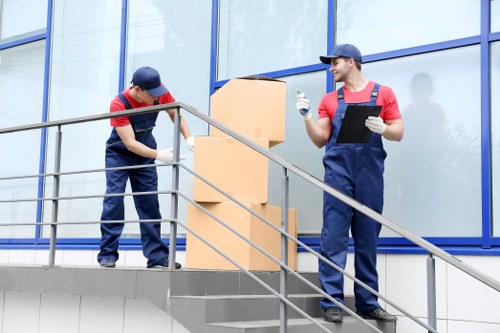 The policy covers key areas including hazard identification, control measures, training, routine inspections, and incident reporting for any activity related to Removals From Uk. It emphasises a proactive approach: risks should be anticipated and controlled before work starts. Typical hazards addressed include manual handling of bulky items, slips and trips in properties, vehicle loading and securing, unsafe use of equipment, and fatigue during long-distance or international removals from the UK. Each project must have a prepared safe system of work documented and communicated to all involved.
Management commitment is central. Senior managers must allocate sufficient resources for safety, ensure documented procedures are in place, and review performance periodically. Line managers are required to conduct and record risk assessments for specific jobs, allocate competent staff for complex moves, and ensure that lifting equipment and trolleys are regularly inspected and maintained. All staff are encouraged to report hazards, suggest improvements and comply with instruction and training. This collaborative culture helps prevent incidents and supports continuous improvement in moving and relocation activities.
 Risk assessments for UK removals should be specific to the site and the load. They must consider access constraints, stairways, narrow doorways, weather impacts on loading and unloading, and the stability of stacked items. Controls should include mechanical aids, team lifts, protective coverings for floors, and clear communications between crew members. The assessments should be recorded and kept with job documentation so that any subcontractors or temporary workers are informed of identified risks and required precautions prior to commencement.
Training and competence are essential. All personnel engaged in removals from the UK must receive induction training covering safe manual handling techniques, use of equipment, correct fitting and usage of PPE, and relevant vehicle safety. Ongoing training should address specialist tasks such as handling fragile antiques, bulky furniture, pianos and electrical appliances. Supervisors should carry out regular practical assessments and use refresher training to address any observed gaps. A register of training and competence should be maintained for audit and review.
Equipment and vehicle safety measures include routine pre-use checks, secure loading plans, and appropriate vehicle restraints. Where lifting aids or powered trolleys are used, maintenance records must be kept and defects reported immediately. Drivers and loaders should follow safe routes for loading, avoid overloading, and ensure that loads are properly secured to prevent movement. In the context of long or cross-border removals, planning must include rest schedules to manage fatigue and clear arrangements for safe parking and unloading at destination sites.
 Incident management and reporting procedures enable learning. Any accident, near miss, or damage must be reported promptly, investigated to identify root causes, and followed by corrective actions to prevent recurrence. Records of incidents and remedial measures are valuable for trend analysis and continuous improvement. Where appropriate, independent reviews of serious incidents should be undertaken to ensure that lessons are effectively integrated into operational practices.
 Monitoring and review of this policy will be undertaken regularly. Performance indicators include the frequency of incidents, results of workplace inspections, completion of training targets, and audit outcomes. The policy will be reviewed after any significant change in operations, introduction of new equipment, or following an incident. Contractors and partners involved in relocation activities are expected to meet these standards and demonstrate compliance through records and cooperation with audits. By embedding these principles, organisations offering removals from the UK can maintain a safe, efficient and professional service.
Key operational controls
To meet the objectives of this policy, practical controls include:
- Pre-move surveys to identify hazards and resources required.
- Safe systems of work documented for each job.
- PPE and equipment provided and maintained.
- Training and competency records for all staff.
- Vehicle checks and secure loading procedures.
Conclusion
This health and safety policy provides a framework for delivering safe, reliable removal services across the UK and for international transitions originating in the UK. It emphasises management commitment, risk-based decision-making and continuous improvement. All personnel involved in removals are required to cooperate with this policy and contribute to a safe workplace.